
BURNING ISSUE
RE: Clarifying the Facts on RAAMP Projects in Response to Misleading Claims by Mr. John Okiyi Kalu (JOK)


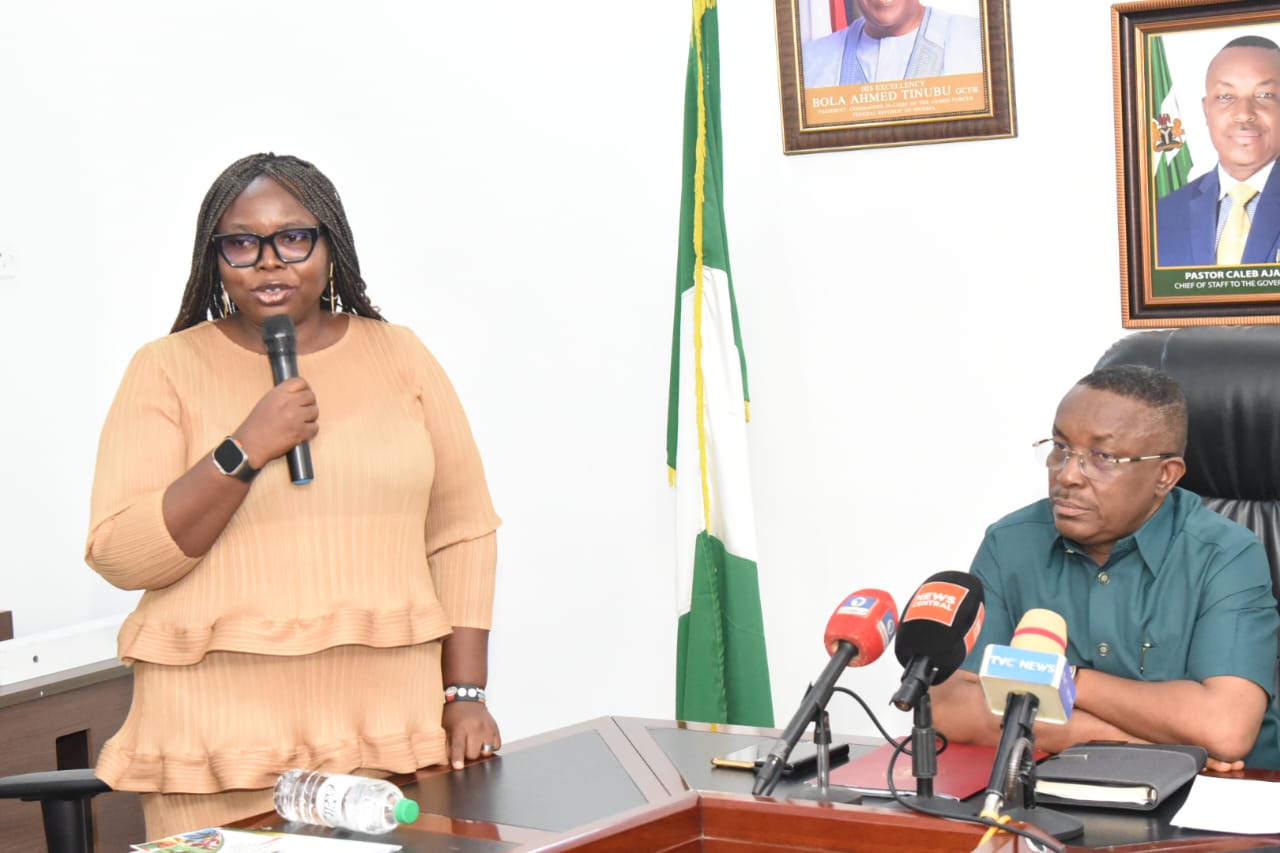
Mr. John Okiyi Kalu has once again made a series of misleading claims regarding the World Bank-supported Rural Access and Agricultural Marketing Project (RAAMP) in Abia State. While I had earlier addressed these issues on April 13, 2025, the persistence of this misinformation compels me to reiterate the facts, not to engage in personal exchanges, but to protect the integrity of public discourse and our development partnerships.
As a Senior Special Assistant to the Governor on Multilateral and Donor Agencies, and an experienced Environmental and Social Safeguard Expert who has worked with the World Bank and other multilateral organizations, I owe the people of Abia a duty to speak with clarity and truth. The Rural Access and Agricultural Marketing Project (RAAMP) is a transformative initiative that must not be distorted for political gains.
To quote political philosopher Hannah Arendt: “The result of a consistent and total substitution of lies for factual truth is not that the lie will now be accepted as truth… but that the sense by which we take our bearings in the real world… is being destroyed.” It is in this spirit that I challenge the ongoing efforts to misrepresent facts and sow confusion. Abians deserve clarity, not political distractions.
Setting the Record Straight:
Mr. Kalu’s assertion that the administration of former Governor Okezie Ikpeazu secured a $60 million fund under RAAMP for 500km of roads and completed all preparatory steps including approvals and counterpart funding is demonstrably incorrect. RAAMP is a federal initiative supported by a $575 million World Bank credit extended to 19 participating states. The funds are not disbursed as fixed allocations, but based on performance indicators such as contracts awarded and milestones achieved.
There is no World Bank or RAAMP documentation that supports the claim of a $60 million earmark for Abia State. Moreover, the roads he listed—including the Umuahia-Abiriba road—are not RAAMP projects. These were executed and funded by the current administration of Governor Alex Otti, as clearly demonstrated during the commissioning of the 46.36km Umuahia–Abiriba road on April 11, 2025, by former President Olusegun Obasanjo. These roads were constructed by firms like Craneburg, Ferotex, and CCECC to global engineering standards.
The “list of RAAMP roads” recently cited by Mr. Kalu is a geospatial inventory—a survey conducted using tools like SW Maps to assess the state of rural roads across the state. It does not constitute a list of designed or approved projects under RAAMP. The only current RAAMP-funded road project under execution is the 19.1km Itungwa–Amaise–Amari–Omoba–Obette–Mgboko–Abiaba–Ubi–Nkwo–Elechi Road, initiated in 2024 by the current administration following all World Bank procedures and safeguards.
Mr. Kalu’s suggestion that the Otti administration is “repackaging old projects” is inaccurate and unsubstantiated. The 2024 and 2025 Appropriation Acts referenced in his claims refer to state-funded infrastructure efforts, not World Bank-funded RAAMP projects. These documents reflect Governor Otti’s commitment to rural development, not duplication.
Counterpart Funding: Facts vs Claims
Contrary to the claim that the previous administration “fully paid” its counterpart funding obligation, records show that only ₦200 million in preparatory funds and an additional ₦330 million loan from UBA, totaling ₦530 million were provided during that period as a counterpart funding. This falls significantly short of the required contribution, which stands at approximately 11% of total contract values for accessing RAAMP’s basket fund.
In contrast, Governor Alex Otti’s administration has paid ₦600 million directly from the state’s resources without borrowing and has approved an additional ₦2.2 billion for the counterpart funding. This clear commitment demonstrates not only the administration’s fiscal responsibility but also its strategic foresight in unlocking development funds for the benefit of rural communities.
The previous administration’s decision to borrow ₦330 million from UBA to fund RAAMP contributions, despite the availability of federal and internally generated resources, was an unfortunate misstep. Such an approach to funding critical infrastructure projects, especially under concessional financing schemes like RAAMP, creates unnecessary debt burdens to the State.
Institutional Reforms and Sustainable Impact
It is important to highlight that one of the major bottlenecks during the past administration was the failure to enact the Rural Access Road Agency (RARA) and State Road Fund (SRF) into law. These frameworks are essential for the sustainability and maintenance of rural roads. Governor Otti’s administration has, within less than two years, successfully passed both RARA and SRF into law, an achievement that demonstrates serious governance and forward planning.
These reforms institutionalize infrastructure maintenance and funding, ensuring that improvements made today will be sustained for generations. They also rebuild trust with our development partners and enhance Abia’s reputation as a credible state partner under global financing frameworks.
RAAMP Project Progress Under Governor Otti
Under the proactive leadership of Governor Otti, RAAMP in Abia has made tangible progress:
1. Pilot Road Construction: 19.1km Itungwa–Amaise–Amari–Omoba–Obette–Mgboko–Abiaba–Ubi–Nkwo–Elechi Road is under active construction.
2. 59km Backlog Maintenance: Contracts for six lots at the final procurement process.
3. 91.22km Upgrade Roads: Evaluation for five lots complete, pending World Bank review.
4. Three Rural Market Improvements: Contracts signed, awaiting mobilization.
During a recent meeting with the World Bank Country Director, Dr. Ndiame Diop, Governor Otti reiterated his administration’s preference for durable road construction standards, specifically the use of stone base over laterite. This strategic shift ensures roads built under RAAMP will be long-lasting and cost-effective, yielding better returns for Abians and development partners alike.
A Responsible Call for Accountability
Let it be clearly stated: World Bank funds are governed by strict guidelines and third-party verifications. These resources should not be misrepresented or politicized. Public trust and the integrity of our institutions must be preserved.
Rather than recycling inaccurate information, Mr. Kalu is encouraged to provide verifiable documentation for his claims, including evidence of counterpart funding, World Bank approvals, and disbursed amounts. Without such documentation, his assertions remain speculative and misleading.
Conclusion
The people of Abia deserve facts, not fiction. Our rural communities deserve roads and markets, not recycled narratives. Under Governor Alex Otti, we are not only executing projects, we are institutionalizing development, restoring accountability, and rebuilding Abia State on the foundations of transparency, fiscal discipline, and integrity.
We encourage citizens to stay informed and support this transformational agenda. Every rural road surveyed under RAAMP is undergoing rigorous procurement and due diligence processes, not lip service. Let us rise above the noise and remain focused on building a stronger Abia, guided by evidence-based governance and collaborative development.
Thank you, Ndi Abia. Let us keep building.
Mr. Odinakachi Eme
Senior Special Assistant to the Governor on Multilateral and Donor Agencies.
BURNING ISSUE
Abia Records Healthcare Breakthrough As 19-Year-Old Accident Victim Undergoes Successful Brain Surgery

The Abia State Government has recorded a major breakthrough in healthcare with the successful performance of an emergency brain surgery on a 19-year-old accident victim at the Abia State Specialist Hospital and Diagnostic Centre, Umuahia, highlighting the growing capacity of the State’s health institutions to provide advanced and specialised medical care.
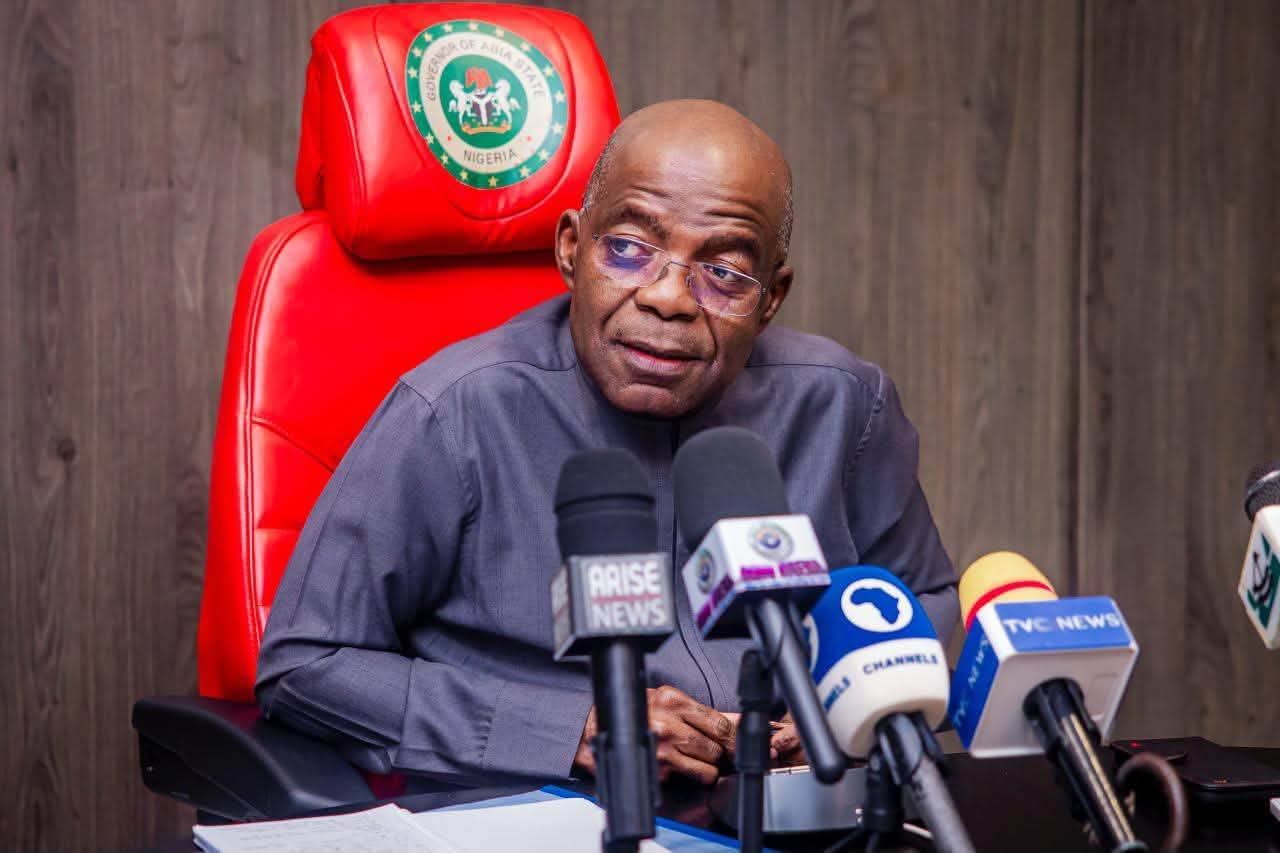
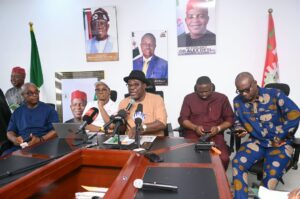
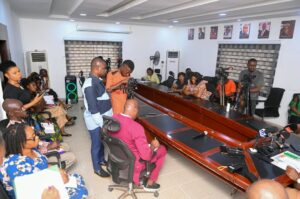
The Commissioner for Information disclosed this at a press briefing following the Executive Council meeting presided over by Governor Alex Chioma Otti, OFR, at the Government House, Umuahia.
The 19-year-old, who was involved in a motorcycle accident on Sunday, October 4, 2026, was rushed to the hospital in critical condition. Medical investigations revealed a massive collection of blood within his skull, placing severe pressure on the brain and requiring immediate neurosurgical intervention.
The emergency operation lasted about four hours, during which more than 100 millilitres of blood clot was evacuated from the patient’s brain and the bleeding controlled. He was subsequently transferred to the Intensive Care Unit for post-operative care and has commenced recovery, including movement of his limbs.
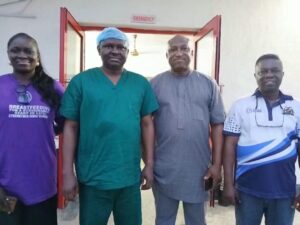
The successful intervention is significant because the availability of appropriate facilities, equipment and specialist personnel enabled the surgery to be performed immediately in Abia, eliminating the potentially fatal delay that could have arisen from referring the patient to another State.
The development is part of the sustained investment by the Otti administration in repositioning the State’s healthcare system over the past three years. Health institutions are being equipped to handle increasingly complex procedures, while specialist personnel are being engaged to strengthen the system’s capacity.
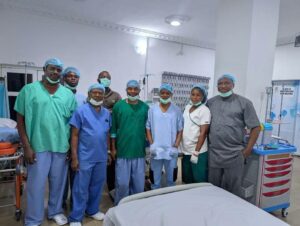
The Abia State Specialist Hospital and Diagnostic Centre has also recorded other successful specialised procedures performed by Nigerian specialists. Meanwhile, increasing healthcare investment is attracting support from development partners and international organisations.
A Swedish organisation has facilitated the provision of specialised medical equipment for trauma-related procedures, including orthopaedic, brain and spine surgeries. These interventions are contributing to the development of competency centres capable of providing specialised healthcare within Abia.
In another major healthcare development, the State Government has approved ₦502.1 million as counterpart funding under the Basic Healthcare Provision Fund, a payment critical to accessing the Federal Government’s allocation under the programme and sustaining healthcare services for vulnerable citizens, particularly pregnant women and children below five years enrolled under the health insurance scheme for vulnerable persons.
The State has also commenced activities for the 2026 World Sight Day, which runs until October 15, with emphasis on eye health, good vision and prevention of avoidable blindness.
The campaign is linking good vision with road safety, particularly among commercial drivers. Free eye screening is being provided at various locations across the State, with the Abia State Eye Health Management Bureau collaborating with the Ministry of Transport, the Federal Road Safety Corps and transport unions. A vision corridor will also be unveiled at the Nnenna Otti Bus Terminal to make eye assessment more accessible to drivers and encourage regular checks.
Government is equally providing health interventions in communities affected by the recent flooding to reduce health hazards and prevent possible disease outbreaks. During the period under review, no cases were recorded of diseases of public health importance, including Lassa fever, Ebola, diphtheria and COVID-19.
On housing, the application process for houses at Pocket Layout has been oversubscribed, indicating strong interest from Abians and residents. Analysis of the Expression of Interest forms is ongoing as the relevant authorities process the submissions.
The government has also conducted a Needs Assessment of the World Bank Estates in Aba and Umuahia and the IBB Layout in Umuahia. Preliminary interventions are already being undertaken in critical areas, particularly road infrastructure and solar street lighting, alongside other measures addressing needs identified during the assessment.
However, the government has revoked the building permit for TradeMore Housing Estate, Ubani, Umuahia, following the discovery of serious planning and regulatory infractions.
The Umuahia Capital Development Authority (UCDA) conducted an inspection following complaints from residents about flooding and defective structures and found that the developer’s original application was for only two structures — a semi-detached two-bedroom bungalow and a three-bedroom bungalow — despite the subsequent development of an entire estate.
The application was also found deficient in critical planning requirements, including survey and site plans, site analysis, layout plan, environmental impact assessment, evidence of administrative fee payments and technical inputs from relevant professionals and government agencies.
The building permit has therefore been revoked, with further steps to address the issues to be communicated.
The UCDA further clarified that although approval for development of the property was granted in March 2015, the developer approached the authority in 2024 seeking approval to build a market on the site. The proposal was rejected because it was inconsistent with the approved agricultural use of the land.
A subsequent inspection found ongoing construction, prompting the authority to issue a stop-work order. Officials attempting to enforce the order were reportedly attacked and rescued through the intervention of Operation Crush. The property has since been sealed and the permits revoked.
Government, however, remains concerned about individuals who may have purchased property within the estate and is working towards resolving the situation, with further communication to follow.
On the persistent flooding in parts of Umuahia, Governor Otti has directed the establishment of an inter-ministerial committee comprising the UCDA and the Ministries of Works, Environment and Lands.
The committee has two weeks to submit a comprehensive report and lasting solution to the perennial flooding affecting Ogurube and Ehimiri layouts.
The administration is seeking a coordinated and sustainable solution to recurring flooding and erosion rather than temporary interventions.
Significant progress has also been recorded on the Emede-Ibeku flood and erosion control project. Clearing of erosion sites is 100 per cent complete, lateral filling is about 90 per cent complete, excavation for drainage approximately 95 per cent complete, while concreting of drainage structures has reached about 90 per cent.
Government expressed optimism that residents of affected communities would soon begin to benefit from the intervention.
The State Government has also issued its Week 40 public health advisory, with specific recommendations for communities affected by flooding. Residents in flood-prone areas have been urged to observe appropriate health and safety measures as government continues efforts to mitigate the impact of flooding and prevent disease outbreaks.
In the area of social protection, the Ministry of Poverty Alleviation and Social Protection has received nine additional Abia indigenes returning from the Republic of South Africa within the past two weeks.
The returnees comprise one adult male, three mothers, four children and one infant, all of whom have been successfully reunited with their families.
The State Government is also preparing to facilitate the return of approximately 100 additional Abia indigenes from South Africa in the coming weeks, with documentation and other arrangements already underway.
The developments reflect the broad approach of the Alex Otti administration to governance, combining investment in specialised healthcare with housing development, infrastructure renewal, flood and erosion control, social protection and enforcement of planning standards.
The growing interest in the Pocket Layout Estate, ongoing interventions in existing residential estates and the expansion of specialised healthcare services further underscore the administration’s stated commitment to improving living conditions and strengthening public institutions.
The emerging New Abia agenda, therefore, extends beyond physical infrastructure to include expanded access to quality healthcare, properly planned residential communities, protection of lives and property, stronger regulatory institutions and responsive government.
BURNING ISSUE
MAN Commends Otti Administration’s Industrial Reforms, Cites Improvements In Abia’s Business Environment

 The Manufacturers Association of Nigeria (MAN) has commended the administration of Governor Alex C. Otti for significant improvements in Abia State’s industrial and business environment, citing developments in infrastructure, electricity, transportation, urban renewal, healthcare, education and enterprise support.
The commendation was made when the leadership of MAN’s Abia/Imo and Rivers/Bayelsa Chapters paid a courtesy visit to Governor Otti at his office in Nvosi, Isiala Ngwa South Local Government Area.
MAN’s Abia/Imo Chairman, Prince Obasi Ekeagbara, said manufacturers were already witnessing positive changes across several sectors of the State.
The recognition provides an important assessment of the administration’s economic direction, particularly its effort to shift Abia from an economy driven largely by trading and consumption towards one increasingly anchored on production, manufacturing, investment, employment and export competitiveness.
At the centre of the administration’s industrial agenda is the rebuilding of the infrastructure and policy environment required for businesses to operate, expand and compete.
According to MAN, improvements in roads, power, transportation, urban renewal and other critical sectors are beginning to address some of the longstanding constraints faced by manufacturers in Aba and other parts of the State.
Of particular significance is the administration’s drive to revive moribund industrial assets, including the Enyimba Garment Factory, Star Paper Mill and Afro Beverages.
MAN described the revival of such industries as a positive development capable of stimulating economic activity and creating employment, while also strengthening confidence among existing and prospective investors.
The administration has been pursuing improved power supply for industrial operators, including engagement around dedicated electricity through Geometric Power.
For Aba, whose entrepreneurial and manufacturing identity is deeply connected with small and medium-scale production, reliable electricity is critical to reducing operating costs, improving productivity and enabling businesses to compete more effectively.
The administration has also pursued improved access to finance through its partnership with the Bank of Industry. The Abia State Government has provided counterpart funding for a ₦10 billion BOI matching-fund initiative designed to support businesses across various sectors, with the first phase structured around government and BOI contributions.
Another aspect of the emerging business environment is the administration’s drive to harmonise taxation and eliminate multiple taxation. For manufacturers, greater clarity and predictability in revenue administration are essential to investment planning and long-term business decisions.
Governor Otti has equally warned businesses against making cash payments to unauthorised persons, stressing the need for a transparent revenue-collection system.
Beyond infrastructure, electricity and finance, the administration is seeking to strengthen the wider industrial ecosystem through platforms such as the Aba Trade Fair and the Export Growth Lab, supported by the United Nations Development Programme (UNDP), which is aimed at helping local producers improve product quality, packaging and competitiveness.
The administration’s position is that government should create the infrastructure, policy direction and enabling environment, while the private sector provides capital, innovation, production capacity and market discipline.

Governor Otti, while receiving the MAN delegation, challenged manufacturers to improve the quality, scale and competitiveness of locally produced goods and position them for wider domestic and international markets.
He urged businesses to take advantage of the opportunities being created by government while ensuring that their products meet acceptable standards.
The MAN delegation, however, also highlighted the broader challenges confronting manufacturers, including high energy costs, inflationary pressures, limited access to foreign exchange, financing difficulties, insecurity and demands from host communities.
The association consequently called for continued efforts to revive more moribund industries, establish industrial clusters across the three senatorial zones, strengthen action against unauthorised levies and provide additional support for distressed industries seeking to return to full production.
The recommendations align with the wider industrialisation agenda already unfolding in the State and underscore the need for sustained collaboration between government and the organised private sector.
For Abia, the significance of the MAN commendation extends beyond a single meeting. It points to an emerging effort to connect infrastructure, electricity, finance, skills, markets and public policy around the productive capacity of the State.
With Aba’s longstanding culture of entrepreneurship and manufacturing, the administration is seeking to transform that resilience into a more structured, infrastructure-backed and competitive industrial economy.
The ultimate objective is an Abia where businesses can move beyond survival to produce, employ, expand, compete and export, thereby contributing more substantially to the State’s economic development.
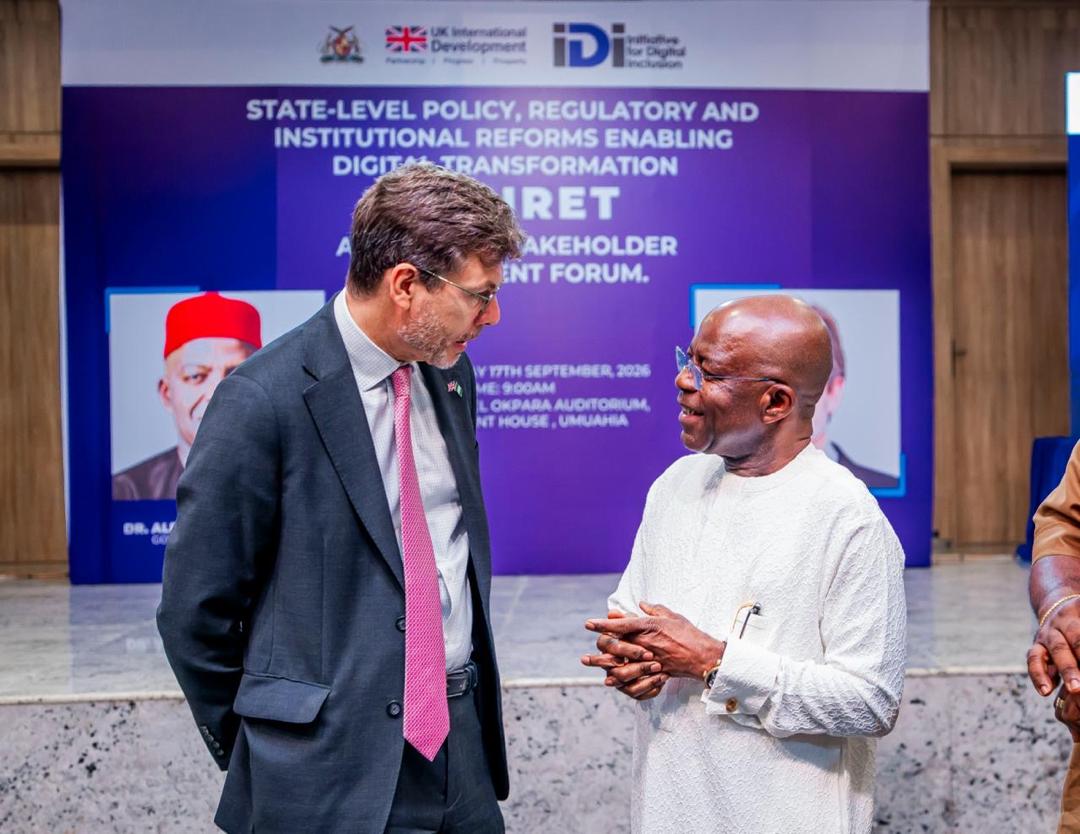
 Abia State Governor, Dr. Alex C. Otti, OFR, has called for stronger collaboration between government, the private sector and development partners to harness digital technology for economic growth, job creation and solutions to community challenges.
Governor Otti made the call while declaring open the State-level Policy, Regulatory and Institutional Reforms Enabling Digital Transformation (SPRIRET) Stakeholder Engagement Programme at the Michael Okpara Auditorium, Government House, Umuahia.
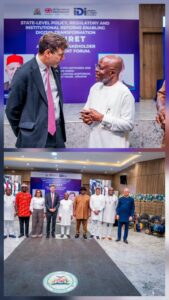
The Governor, who described technology as an indispensable accelerator of development, said Abia was committed to leveraging digital transformation to improve public services, reduce administrative costs, create jobs and attract investment.
“My charge to all of us, as I declare this event formally open, is to identify ways of leveraging the possibilities of digital technology to solve much of the real problems confronting our communities with particular attention to security challenges, unemployment, post-harvest losses for agro produce, urban property rentals, environmental degradation and other challenges that threaten our economic and social wellbeing.
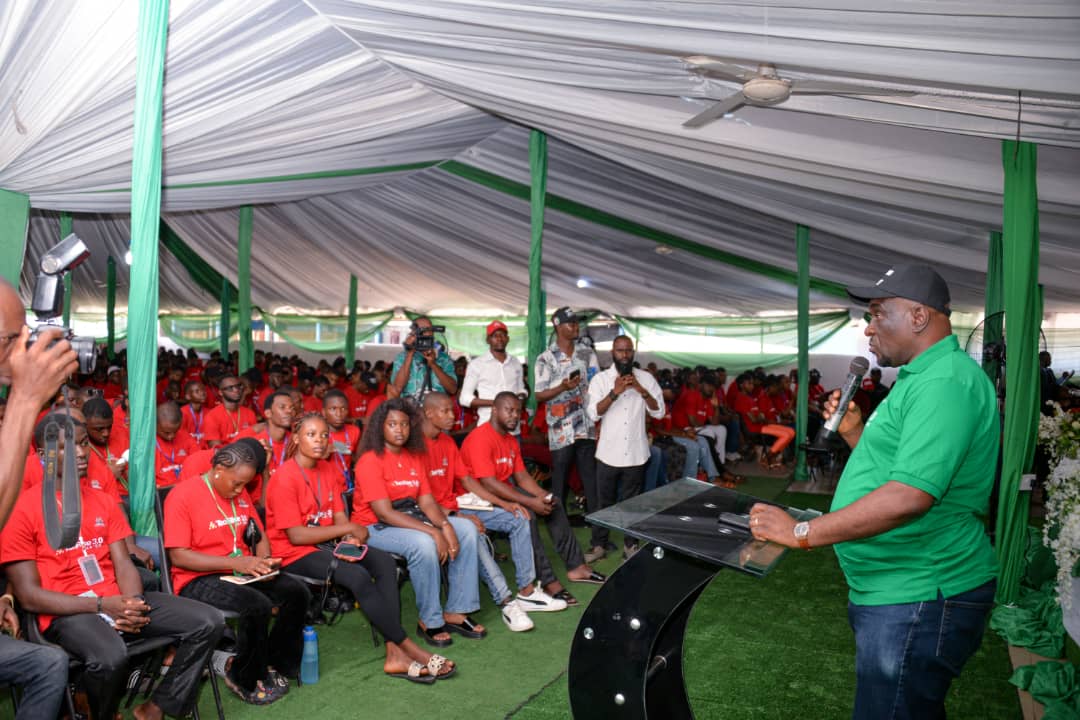
He disclosed that the State’s TechRise programme had trained more than 2,200 young people in various ICT skills, while initiatives including ThriveAbia, Abia Digi-Upskill and Girls-in-ICT were expanding digital opportunities.
“This is the age of knowledge where wealth is tied to the capacity to create solutions that enrich the human experience. The task for us therefore is to identify the operational vehicles for harnessing the opportunities that have been offered us by the genius of technology and the limitless capacity that it holds for our social and economic transformation,” Governor Otti said.
Otti also highlighted the State’s Dig Once Policy, Startup Law, N2 billion startup support fund, Abia State Technological Skills Acquisition Centre and the N306 million Nkata technology-enabling business grant as measures designed to strengthen the technology ecosystem.
He said the SPRIRET initiative, supported by the United Kingdom’s Foreign, Commonwealth and Development Office (FCDO), would help Abia strengthen its policy, regulatory and institutional framework for a more connected and accountable digital economy.
The Governor commended the British High Commission for its support, noting that 500 Abia civil servants had previously benefited from a UK-supported digital transformation programme.
The British Deputy High Commissioner to Nigeria, Mr. Jonny Baxter, said the UK was pleased to partner with Abia, describing digital technology as a critical tool for improving public services, creating economic opportunities and strengthening government effectiveness.
“Digital transformation cannot be achieved by government alone. It requires collaboration and open dialogue,” he said.
Baxter disclosed that about 450 civil servants in Abia had received UK-supported digital skills training, while community-owned connectivity hubs were being developed at Okporoenyi and Arochukwu to expand affordable digital access and literacy.

He stressed that digital transformation required collaboration among government, the private sector, civil society, academia and the wider technology ecosystem.
The Chief Information Officer to the State Government, Mr. Gerald Ilukwe, said the programme would assess Abia’s digital ecosystem and identify areas requiring policy, regulatory and institutional improvements.
He disclosed that the FCDO Digital Access Programme was supporting five Nigerian states, including Abia, to undertake reforms aimed at accelerating digital development.
Governor Otti urged stakeholders to use the SPRIRET platform to develop technology-driven solutions to challenges including insecurity, unemployment, post-harvest losses, property rentals and environmental degradation, stressing that the ultimate measure of progress would be increased investment, employment and the contribution of the digital sector to Abia’s economy.
-
 BURNING ISSUE3 months ago
FG, UNDP, TETFUND And Governor Otti Launch Manu-Tech UniPod, Says Innovation Will Power Abia’s Next Industrial Revolution
-
 BURNING ISSUE4 months ago
Abia Strengthens Security Architecture With Okada Restrictions, Citizen’s Engagement Centre, And Statewide Digital Connectivity Drive
-

 Education3 months ago
NSCDC, CDOWA Launch Statewide Safe School Campaign In Abia, Donate Educational And Sanitary Materials To Students
-
 NATIONAL NEWS3 months ago
NSCDC Strengthens Private Security Regulation In Abia …Moves To Enhance National Security Architecture
-

 BURNING ISSUE3 months ago
Tinubu, Obasanjo, Dame Patience Jonathan, Otti Lead National Tribute To Aguiyi-Ironsi At 60th Memorial Thanksgiving
-

 Uncategorized4 months ago
Abia Government Cracks Down on Okada Operations in Major Cities, Violators Risk Arrest and Confiscation
-
 BURNING ISSUE2 months ago
Abia Begins Payment of 10-Year-Old Gratuity Arrears, Tackles N61.8bn Legacy Liability
-
 BURNING ISSUE2 months ago
Abia State Celebrates 35 Years With Project Commissioning, Healthcare Expansion, Technology -Driven Services