
NATIONAL NEWS
NSCDC ABIA STATE COMMAND FLAGS OFF STRATEGIC CAPACITY-BUILDING WORKSHOP ON TECHNOLOGICAL ADVANCEMENT IN SECURITY MANAGEMENT

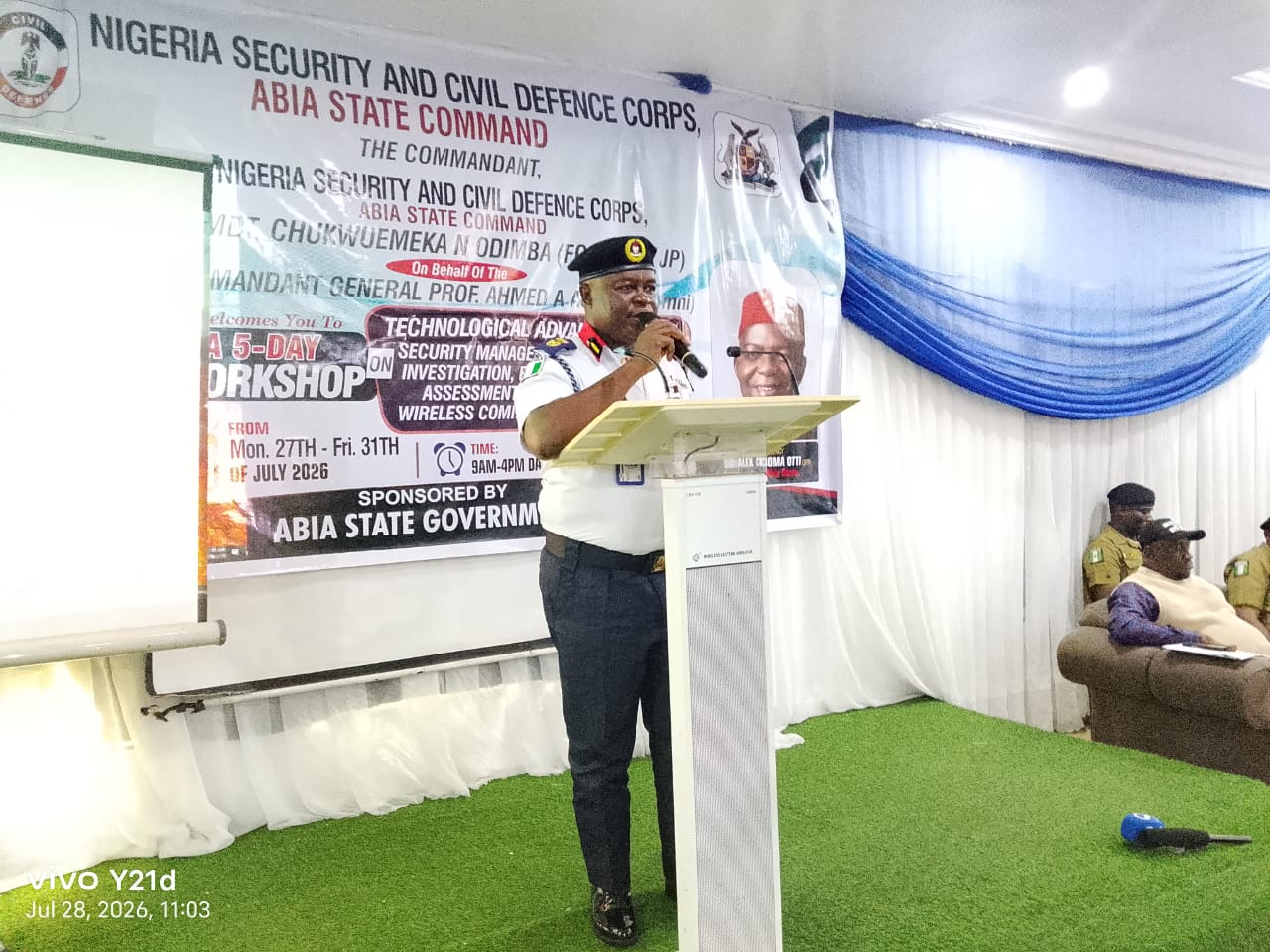
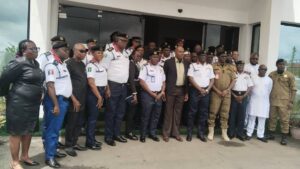
In furtherance of the Federal Government’s commitment to strengthening internal security through continuous manpower development and the adoption of modern technology, the Nigeria Security and Civil Defence Corps (NSCDC), Abia State Command, has commenced A5-day Strategic Capacity-Building Workshop for senior officers on “Technological Advancement in Security Management.”
The workshop, which commenced on Tuesday, 28th July and will conclude on Thursday, 30th July, 2026, is holding at Harriet Hotel, Umuahia, with participants drawn from the State Command Headquarters, Area Commands and Divisional Offices across the seventeen Local Government Areas of Abia State.
The intensive training programme focuses on modern security management, intelligence gathering, criminal investigation, prosecution, threat assessment, drone technology, wireless communication systems, digital evidence management, artificial intelligence applications, inter-agency collaboration and other contemporary security strategies designed to improve operational effectiveness and service delivery.
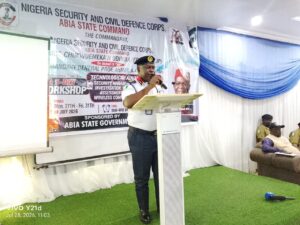
De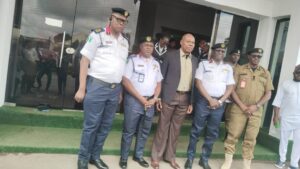 claring the workshop open, the State Commandant of the NSCDC, Chukwuemeka N. Odimba, described the training as a significant milestone in the Command’s determination to build a highly professional, technologically driven and intelligence-based workforce capable of responding effectively to evolving security threats.
Commandant Odimba noted that insecurity has become increasingly sophisticated due to technological advancement and changing criminal tactics, stressing that security personnel must continuously update their knowledge and operational skills in order to remain ahead of criminal elements.
He explained that the workshop was carefully designed to expose participants to emerging trends in security management while improving their capacity in intelligence gathering, surveillance, criminal investigation, prosecution, risk assessment, cyber-supported policing, drone operations and wireless communication technology.
According to him, modern security management can no longer rely solely on conventional methods but must embrace digital innovations, intelligence-driven operations and effective collaboration among security agencies to achieve sustainable peace and public safety.
The State Commandant expressed profound appreciation to the Commandant General of the Nigeria Security and Civil Defence Corps, Professor Ahmed Abubakar Audi, mni, OFR, for his visionary leadership, unwavering commitment to personnel development and sustained investment in training and retraining of officers across the country.
He equally appreciated the Governor of Abia State, Dr. Alex Chioma Otti, OFR, for his unwavering support to the Command and other security agencies, describing the Governor as a strong advocate of security collaboration whose administration has continued to provide the enabling environment for effective security operations throughout the state.
Commandant Odimba urged participants to give maximum attention to every lecture and practical session throughout the workshop, reminding them that the programme was designed as a “train-the-trainer” initiative. He charged them to transfer the knowledge acquired to officers and personnel under their respective commands immediately after the training.
He disclosed that certificates would be presented to all participants upon successful completion of the workshop and expressed confidence that the exercise would greatly improve professionalism, operational efficiency and service delivery across the Command.
Delivering the keynote address on behalf of the Commandant General, the Zonal Commander, Zone 5 Headquarters, Owerri, Dr. Ahmed Ahmed Gandi, conveyed the sincere apologies of Professor Ahmed Abubakar Audi for his inability to attend the programme due to unavoidable official engagements.
According to Dr. Gandi, the Commandant General had originally intended to personally declare the workshop open, a development which clearly demonstrates the high premium the Corps’ leadership places on continuous capacity building and professional development.
Presenting the goodwill message of the Commandant General, Dr. Gandi stated that today’s security environment demands a new generation of officers equipped not only with courage and discipline but also with technological competence, analytical skills, emotional intelligence and professional ethics.
He noted that criminal activities have become increasingly complex and technology-driven, making continuous education indispensable for every security professional.
The Commandant General explained that the workshop would equip officers with updated knowledge in intelligence gathering, intelligence analysis, criminal investigation, prosecution, digital evidence management, drone deployment, artificial intelligence, integrated communication systems, risk assessment and modern operational planning.
He stressed that effective security management is no longer measured solely by physical strength or the use of force but by intelligence-led operations, professionalism, teamwork, strategic communication, emotional control and the ability to make sound operational decisions under pressure.
Professor Audi further observed that modern security institutions across the world are gradually migrating from isolated operational systems to integrated security management platforms that combine surveillance cameras, access control systems, alarm monitoring, intelligence databases, incident reporting and advanced analytics into a single operational framework.
According to him, artificial intelligence has become an indispensable tool for processing huge volumes of intelligence reports, reducing false alarms, identifying emerging threats and supporting faster operational decision-making.
He explained that mobile operational applications now enable field officers to verify patrol activities, submit incident reports in real time and maintain seamless communication with command centres.
The Commandant General also highlighted the growing importance of digital evidence in criminal investigations, noting that mobile phone records, location data, messaging logs, digital footprints and forensic documentation have become vital tools in successful criminal prosecution.
He maintained that the increasing use of technology in criminal justice administration requires investigators to maintain proper chain of custody, standardised evidence management and internationally acceptable forensic procedures.
Professor Audi further identified drones as one of the most valuable assets in modern security operations, particularly in aerial surveillance, search-and-rescue missions, disaster response, intelligence gathering, protection of critical national assets and rapid deployment during emergencies.
He equally underscored the importance of secure wireless communication systems capable of supporting real-time information sharing between operational teams, command centres and other security agencies.
The Commandant General reaffirmed that the Corps remains committed to supporting the Renewed Hope Agenda of President Bola Ahmed Tinubu, GCFR, particularly in the area of strengthening national security through innovation, institutional reforms, inter-agency collaboration and continuous human capacity development.
He also commended the Government of Abia State for its unwavering support to security agencies, noting that Governor Alex Otti’s commitment to improving security has significantly enhanced operational effectiveness and public confidence across the state.
Professor Audi encouraged participants to actively participate in every session, ask questions, exchange professional experiences and ensure that the knowledge acquired translates into practical improvements in their respective commands.
He officially declared the Strategic Capacity-Building Workshop open and expressed confidence that the training would produce officers capable of delivering more efficient, intelligence-driven and technology-oriented security services.
In his goodwill message, the Commander of the National Drug Law Enforcement Agency (NDLEA), Abia State Command, Commander of Narcotics Leonard Nnamdi, congratulated the NSCDC for organising what he described as a timely and highly strategic workshop.
He observed that organised crime, illicit drug trafficking and other emerging security threats have become increasingly sophisticated, making technological innovation and continuous personnel training indispensable.
According to him, no single security agency can effectively address contemporary security challenges without strong collaboration, intelligence sharing and coordinated operations.
Commander Nnamdi reaffirmed the commitment of the NDLEA to sustaining its robust partnership with the NSCDC and other security agencies towards safeguarding lives and property in Abia State.
Also delivering a goodwill message, Prince Uzor Nwachukwu commended the foresight of the NSCDC leadership in organising the workshop and stressed the importance of integrating drone technology, wireless communication and intelligence gathering into daily security operations.
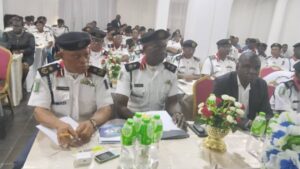
He reaffirmed the readiness of stakeholders to continue collaborating with the Corps in promoting peace, public safety and sustainable development across the state.
Similarly, the Special Adviser to the Governor on Security Matters, retired Navy Commodore MacDonald Rit Ubah, applauded the NSCDC for its professionalism and resilience in complementing other security agencies in maintaining peace and security throughout Abia State.
He disclosed that the effective collaboration among security agencies under the administration of Governor Alex Otti has contributed significantly to the remarkable improvement in the security situation across the state.
Commander Ubah urged participants to maximise the opportunity provided by the workshop and ensure that the knowledge acquired is replicated across Area Commands, Divisions and operational formations in order to strengthen institutional capacity.
Speaking with the Press,shortly after the opening ceremony, the Zonal Commander, Dr. Ahmed Ahmed Gandi, expressed satisfaction with the level of participation, discipline and enthusiasm displayed by officers attending the workshop.
He described the security situation in Abia and Imo States as greatly improved compared to previous years and attributed the progress to sustained collaboration among the NSCDC, the Armed Forces, the Nigeria Police Force, the Department of State Services, the NDLEA and other security agencies.
Dr. Gandi reaffirmed that effective inter-agency synergy remains one of the strongest strategies for combating insecurity across the federation.
He further commended the leadership of the Abia State Command under Commandant Chukwuemeka N. Odimba, describing him as a hardworking and result-oriented officer whose commitment continues to attract commendation from both the Corps’ leadership and the Abia State Government.
The workshop is expected to produce a new generation of highly skilled officers equipped with modern technological knowledge capable of enhancing intelligence gathering, criminal investigation, digital evidence management, prosecution, drone deployment, emergency response, protection of critical national assets and infrastructure, and overall operational efficiency.
The initiative further demonstrates the unwavering commitment of the Nigeria Security and Civil Defence Corps to professionalism, innovation, technological advancement, continuous manpower development and effective service delivery in line with its statutory mandate and the Federal Government’s vision of building a safer, more secure and technologically advanced Nigeria.
Onyebuchi Juliet Nwabu
FIC Correspondent, Nigeria Security and Civil Defence Corps (NSCDC)
28th July 2026.




NATIONAL NEWS
NSCDC, Electrical Contractors Partner To Tackle Substandard Installations In Abia State
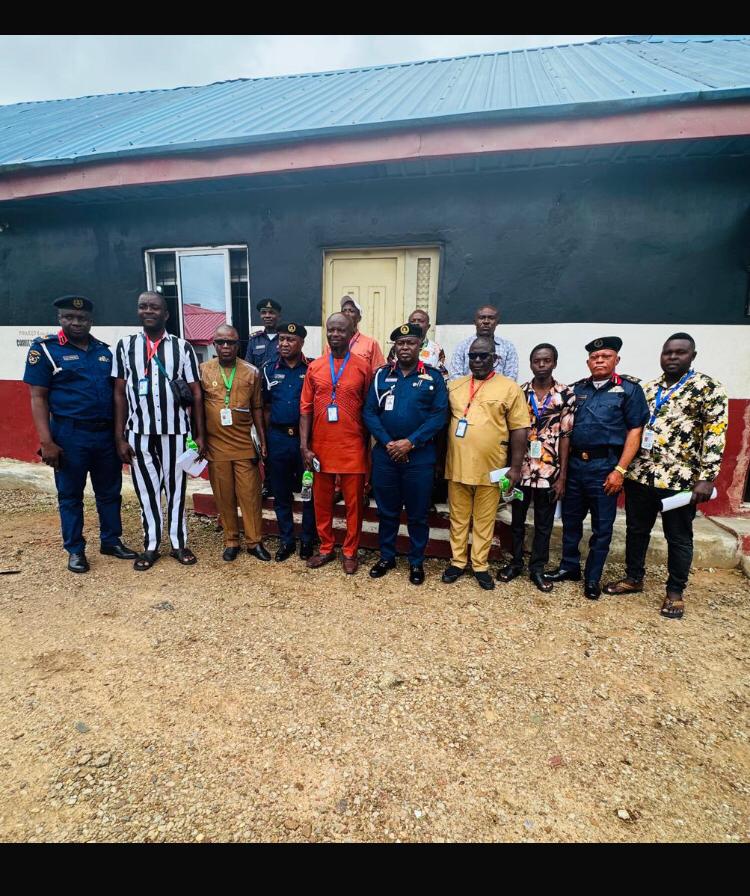
The Nigeria Security and Civil Defence Corps (NSCDC), Abia State Command, has pledged to collaborate with the Licensed Electrical Contractors Association of Nigeria (LECAN) to curb substandard electrical installations and tackle unlicensed practitioners in the state.
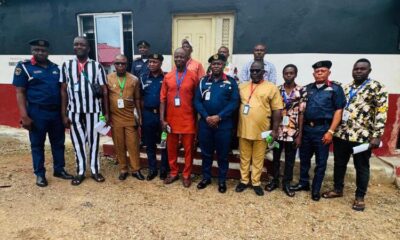
The State Commandant, CC Chukwuemeka N. Odimba, FCIA, KSM, JP, gave the assurance when he received the LECAN delegation, led by its South-East Zonal National Coordinator, Engr. Nwachukwu Anozie Charles, at the command headquarters in Umuahia.
He expressed concern over fire outbreaks, electrocution and other disasters associated with faulty electrical installations, urging contractors to comply with established regulatory standards.
The LECAN delegation called for NSCDC’s support in enforcing the provisions of the Nigeria Electricity Management Services Agency (NEMSA) Act, 2015, particularly against dealers of substandard electrical materials and unlicensed contractors.
The association’s Abia State Chairman, Mr. Uche Edward Chinwendu, lamented the losses suffered by individuals and communities due to the use of inferior electrical materials and unprofessional installations.
Commandant Odimba described power infrastructure as a critical national asset and reaffirmed the corps’ commitment to protecting lives and infrastructure through collaboration with relevant stakeholders.
He urged LECAN to provide actionable information on individuals involved in the sale of substandard electrical materials and the activities of unlicensed contractors, while intensifying public enlightenment on electrical safety and approved installation standards.
From: Onyebuchi Juliet Nwabu.
FIC Correspondent: Nigeria Security and Civil Defence Corps.
9th October 2026.
NATIONAL NEWS
NIPOST Harps On Digital Innovation, Financial Inclusion And Efficiency As Abia Marks 2026 World Post Day

The Nigerian Postal Service (NIPOST) has reaffirmed the importance of digital innovation, financial inclusion and efficient service delivery in strengthening national connectivity and expanding economic opportunities as it marked the 2026 World Post Day in Abia State.

World Post Day commemorates the establishment of the Universal Postal Union in 1874 and highlights the role of international postal cooperation in connecting people and facilitating the movement of mail and goods across borders.
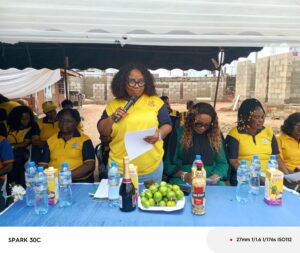
The State Postal Manager, Mrs. Winifred N. Amadi, stated this during the 152nd celebration of World Post Day held at the NIPOST State Headquarters on October 9, 2026, under the theme, “One Postal Network, Infinite Possibilities.”

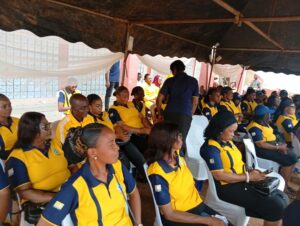

Amadi highlighted initiatives under the leadership of the Postmaster General and Chief Executive Officer, Ms. Tola Odeyemi, including digital postcodes, financial services, postal digitalisation and approved e-government services designed to improve postal operations nationwide.
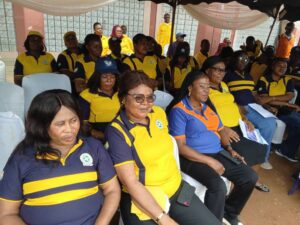
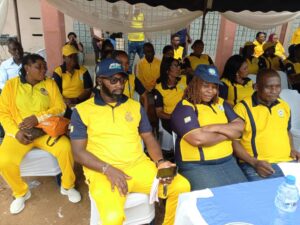
She described World Post Day as an opportunity to recognise the enduring role of postal services in connecting people, businesses and nations, recalling the establishment of the Universal Postal Union in 1874 to strengthen international postal cooperation.
She also disclosed that NIPOST offers 21 products to customers, insisting that the service remained operational and effective despite perceptions that it had lost relevance in the digital age.


The SPM,however, commended the Abia State Governor Alex Otti’s led administration, through the Ministry of Sports and Youth Development under Sir Nwaobilor Ananaba, for providing free coaster buses to support the state contingent at the recently concluded NIPOST Sports Festival in Benin City, Edo State where they came back with a trophy.

She urged NIPOST to look beyond traditional mail delivery by embracing technology, improving customer experience and ensuring accessible, reliable and responsive services across communities. She also commended the commitment, sacrifice and resilience of staff in Abia State.


In a goodwill message, the Head of Centre, Federal Information Centre, Abia State, and Chairman of the Association of Heads of Federal Establishments (AHFE), Abia State, Lady Gloria Ify Abiakam, congratulated NIPOST management and staff, describing the theme as a reflection of the opportunities an integrated and modern postal network offers for national development.
Lady Abiakam noted that NIPOST could contribute more significantly to Nigeria’s digital economy by supporting small and medium-scale enterprises, facilitating e-commerce, strengthening logistics and extending financial and other essential services to underserved communities.
She called for sustained professionalism, accountability, strategic partnerships and technology-driven service delivery, stressing that an efficient postal network could promote economic growth, social inclusion and stronger connections among communities and institutions.

The messages underscored the need for digital transformation, accessible customer-focused services, staff commitment and stronger support for businesses as priorities for the future of postal services.
The celebration also reaffirmed the relevance of NIPOST in a changing economy and the need to maximise the possibilities offered by an interconnected postal network.
The 2026 World Post Day theme, “One Postal Network, Infinite Possibilities,” highlights the potential of postal services to connect communities, empower businesses and advance inclusive development.




BURNING ISSUE
MAN Commends Otti Administration’s Industrial Reforms, Cites Improvements In Abia’s Business Environment

 The Manufacturers Association of Nigeria (MAN) has commended the administration of Governor Alex C. Otti for significant improvements in Abia State’s industrial and business environment, citing developments in infrastructure, electricity, transportation, urban renewal, healthcare, education and enterprise support.
The commendation was made when the leadership of MAN’s Abia/Imo and Rivers/Bayelsa Chapters paid a courtesy visit to Governor Otti at his office in Nvosi, Isiala Ngwa South Local Government Area.
MAN’s Abia/Imo Chairman, Prince Obasi Ekeagbara, said manufacturers were already witnessing positive changes across several sectors of the State.
The recognition provides an important assessment of the administration’s economic direction, particularly its effort to shift Abia from an economy driven largely by trading and consumption towards one increasingly anchored on production, manufacturing, investment, employment and export competitiveness.
At the centre of the administration’s industrial agenda is the rebuilding of the infrastructure and policy environment required for businesses to operate, expand and compete.
According to MAN, improvements in roads, power, transportation, urban renewal and other critical sectors are beginning to address some of the longstanding constraints faced by manufacturers in Aba and other parts of the State.
Of particular significance is the administration’s drive to revive moribund industrial assets, including the Enyimba Garment Factory, Star Paper Mill and Afro Beverages.
MAN described the revival of such industries as a positive development capable of stimulating economic activity and creating employment, while also strengthening confidence among existing and prospective investors.
The administration has been pursuing improved power supply for industrial operators, including engagement around dedicated electricity through Geometric Power.
For Aba, whose entrepreneurial and manufacturing identity is deeply connected with small and medium-scale production, reliable electricity is critical to reducing operating costs, improving productivity and enabling businesses to compete more effectively.
The administration has also pursued improved access to finance through its partnership with the Bank of Industry. The Abia State Government has provided counterpart funding for a ₦10 billion BOI matching-fund initiative designed to support businesses across various sectors, with the first phase structured around government and BOI contributions.
Another aspect of the emerging business environment is the administration’s drive to harmonise taxation and eliminate multiple taxation. For manufacturers, greater clarity and predictability in revenue administration are essential to investment planning and long-term business decisions.
Governor Otti has equally warned businesses against making cash payments to unauthorised persons, stressing the need for a transparent revenue-collection system.
Beyond infrastructure, electricity and finance, the administration is seeking to strengthen the wider industrial ecosystem through platforms such as the Aba Trade Fair and the Export Growth Lab, supported by the United Nations Development Programme (UNDP), which is aimed at helping local producers improve product quality, packaging and competitiveness.
The administration’s position is that government should create the infrastructure, policy direction and enabling environment, while the private sector provides capital, innovation, production capacity and market discipline.

Governor Otti, while receiving the MAN delegation, challenged manufacturers to improve the quality, scale and competitiveness of locally produced goods and position them for wider domestic and international markets.
He urged businesses to take advantage of the opportunities being created by government while ensuring that their products meet acceptable standards.
The MAN delegation, however, also highlighted the broader challenges confronting manufacturers, including high energy costs, inflationary pressures, limited access to foreign exchange, financing difficulties, insecurity and demands from host communities.
The association consequently called for continued efforts to revive more moribund industries, establish industrial clusters across the three senatorial zones, strengthen action against unauthorised levies and provide additional support for distressed industries seeking to return to full production.
The recommendations align with the wider industrialisation agenda already unfolding in the State and underscore the need for sustained collaboration between government and the organised private sector.
For Abia, the significance of the MAN commendation extends beyond a single meeting. It points to an emerging effort to connect infrastructure, electricity, finance, skills, markets and public policy around the productive capacity of the State.
With Aba’s longstanding culture of entrepreneurship and manufacturing, the administration is seeking to transform that resilience into a more structured, infrastructure-backed and competitive industrial economy.
The ultimate objective is an Abia where businesses can move beyond survival to produce, employ, expand, compete and export, thereby contributing more substantially to the State’s economic development.
-
 BURNING ISSUE3 months ago
FG, UNDP, TETFUND And Governor Otti Launch Manu-Tech UniPod, Says Innovation Will Power Abia’s Next Industrial Revolution
-
 BURNING ISSUE4 months ago
Abia Strengthens Security Architecture With Okada Restrictions, Citizen’s Engagement Centre, And Statewide Digital Connectivity Drive
-

 Education3 months ago
NSCDC, CDOWA Launch Statewide Safe School Campaign In Abia, Donate Educational And Sanitary Materials To Students
-
 NATIONAL NEWS3 months ago
NSCDC Strengthens Private Security Regulation In Abia …Moves To Enhance National Security Architecture
-
 BURNING ISSUE2 months ago
Tinubu, Obasanjo, Dame Patience Jonathan, Otti Lead National Tribute To Aguiyi-Ironsi At 60th Memorial Thanksgiving
-

 Uncategorized4 months ago
Abia Government Cracks Down on Okada Operations in Major Cities, Violators Risk Arrest and Confiscation
-
 BURNING ISSUE2 months ago
Abia Begins Payment of 10-Year-Old Gratuity Arrears, Tackles N61.8bn Legacy Liability
-
 BURNING ISSUE2 months ago
Abia State Celebrates 35 Years With Project Commissioning, Healthcare Expansion, Technology -Driven Services