
BURNING ISSUE
FENRAD Commends Abia Government’s Ban On Commercial Motorcycles In Metropolitan Areas, Calls For Effective Implementation

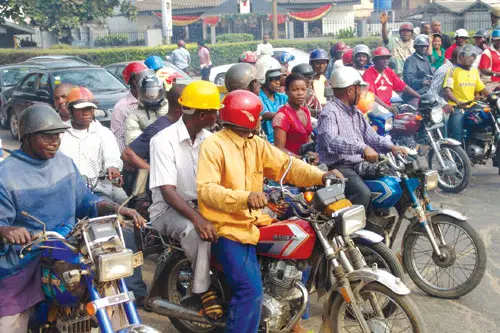
The Foundation for Environmental Rights Advocacy & Development (FENRAD), Nigeria, has commended the Governor of Abia State, Dr. Alex Chioma Otti, OFR, for the decision to ban the operations of commercial motorcycles, popularly known as Okada, within the metropolitan areas of Aba, Umuahia, and Ohafia, effective Monday, June 22, 2026.
In a statement issued by its Executive Director, Comrade Nelson Nnanna Nwafor, the organization described the policy as a bold and timely intervention aimed at tackling rising security challenges, improving public safety, reducing road traffic accidents, and promoting a more organized urban transportation system across the affected cities.
FENRAD noted that in recent years, Aba and Umuahia have witnessed a disturbing increase in criminal activities facilitated by the use of commercial motorcycles. According to the organization, incidents of armed robbery, phone and bag snatching, targeted attacks, and swift escapes from crime scenes have often been linked to the operational flexibility of motorcycles, which can easily navigate congested roads and narrow streets.

The rights advocacy group stated that the continued use of motorcycles in urban centres for criminal activities has contributed to growing insecurity and fear among residents, thereby undermining public confidence in security agencies and governance.
The organization expressed confidence that restricting commercial motorcycle operations within metropolitan areas would enhance the capacity of security agencies to monitor movement, curb criminal activities, and strengthen law enforcement efforts in combating urban crime.
Beyond security concerns, FENRAD emphasized that the ban could significantly reduce the high rate of road traffic accidents associated with commercial motorcycle operations. The group cited reckless riding, dangerous overtaking, overloading, disregard for traffic regulations, and poor compliance with road safety standards as major factors contributing to numerous avoidable injuries and fatalities across the state’s urban centres.
While supporting the government’s decision, FENRAD stressed that motorcycles remain an essential mode of transportation in many rural and hard-to-reach communities where alternative transport services are either inadequate or unavailable.
The Foundation therefore urged the Abia State Government to ensure that commercial motorcycle operations are properly regulated and streamlined in rural communities, villages, and other underserved areas, while maintaining the ban within designated metropolitan centres.
FENRAD further called on the government to complement the policy with improved public transportation systems, economic support and transition programmes for affected motorcycle operators, and a fair, professional, and rights-based enforcement approach.
The organization also appealed to residents, transport unions, community leaders, and security agencies to support the successful implementation of the policy, noting that collective cooperation is essential to achieving the intended security and safety objectives.
Reaffirming its commitment to public interest advocacy, FENRAD stated that it would continue to support policies that promote public safety, strengthen security, protect human rights, enhance environmental sustainability, and improve the overall quality of life of citizens.
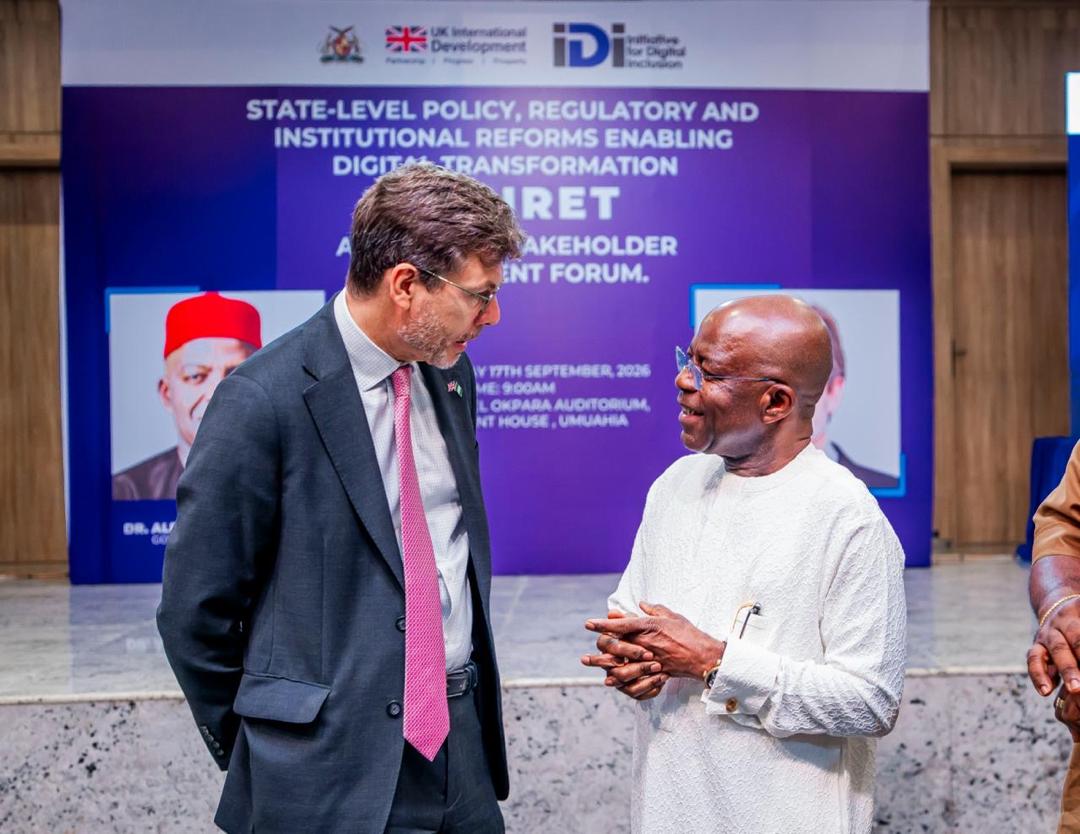
 Abia State Governor, Dr. Alex C. Otti, OFR, has called for stronger collaboration between government, the private sector and development partners to harness digital technology for economic growth, job creation and solutions to community challenges.
Governor Otti made the call while declaring open the State-level Policy, Regulatory and Institutional Reforms Enabling Digital Transformation (SPRIRET) Stakeholder Engagement Programme at the Michael Okpara Auditorium, Government House, Umuahia.

The Governor, who described technology as an indispensable accelerator of development, said Abia was committed to leveraging digital transformation to improve public services, reduce administrative costs, create jobs and attract investment.
“My charge to all of us, as I declare this event formally open, is to identify ways of leveraging the possibilities of digital technology to solve much of the real problems confronting our communities with particular attention to security challenges, unemployment, post-harvest losses for agro produce, urban property rentals, environmental degradation and other challenges that threaten our economic and social wellbeing.
He disclosed that the State’s TechRise programme had trained more than 2,200 young people in various ICT skills, while initiatives including ThriveAbia, Abia Digi-Upskill and Girls-in-ICT were expanding digital opportunities.
“This is the age of knowledge where wealth is tied to the capacity to create solutions that enrich the human experience. The task for us therefore is to identify the operational vehicles for harnessing the opportunities that have been offered us by the genius of technology and the limitless capacity that it holds for our social and economic transformation,” Governor Otti said.
Otti also highlighted the State’s Dig Once Policy, Startup Law, N2 billion startup support fund, Abia State Technological Skills Acquisition Centre and the N306 million Nkata technology-enabling business grant as measures designed to strengthen the technology ecosystem.
He said the SPRIRET initiative, supported by the United Kingdom’s Foreign, Commonwealth and Development Office (FCDO), would help Abia strengthen its policy, regulatory and institutional framework for a more connected and accountable digital economy.
The Governor commended the British High Commission for its support, noting that 500 Abia civil servants had previously benefited from a UK-supported digital transformation programme.
The British Deputy High Commissioner to Nigeria, Mr. Jonny Baxter, said the UK was pleased to partner with Abia, describing digital technology as a critical tool for improving public services, creating economic opportunities and strengthening government effectiveness.
“Digital transformation cannot be achieved by government alone. It requires collaboration and open dialogue,” he said.
Baxter disclosed that about 450 civil servants in Abia had received UK-supported digital skills training, while community-owned connectivity hubs were being developed at Okporoenyi and Arochukwu to expand affordable digital access and literacy.

He stressed that digital transformation required collaboration among government, the private sector, civil society, academia and the wider technology ecosystem.
The Chief Information Officer to the State Government, Mr. Gerald Ilukwe, said the programme would assess Abia’s digital ecosystem and identify areas requiring policy, regulatory and institutional improvements.
He disclosed that the FCDO Digital Access Programme was supporting five Nigerian states, including Abia, to undertake reforms aimed at accelerating digital development.
Governor Otti urged stakeholders to use the SPRIRET platform to develop technology-driven solutions to challenges including insecurity, unemployment, post-harvest losses, property rentals and environmental degradation, stressing that the ultimate measure of progress would be increased investment, employment and the contribution of the digital sector to Abia’s economy.
BURNING ISSUE
NIMC Takes NIN Enlightenment Campaign To Abia Streets, Says Digital Identity Key To Inclusive Economy
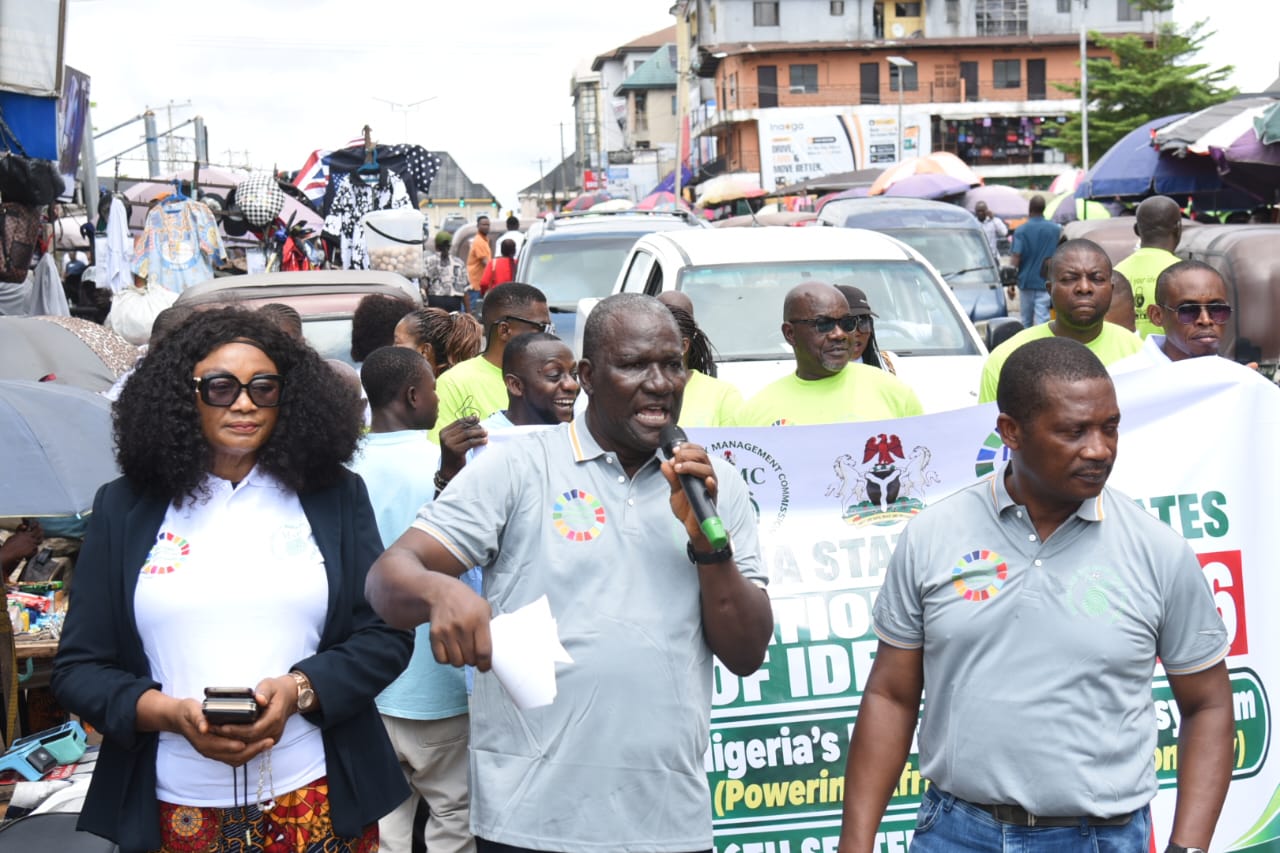
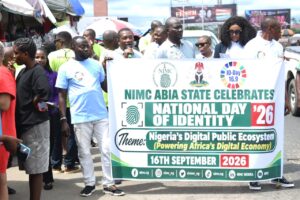
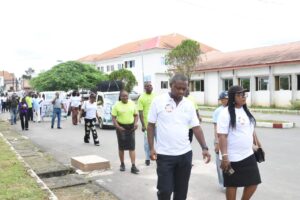
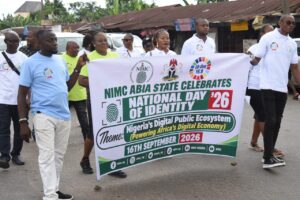
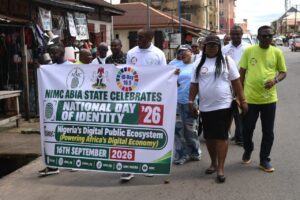
The National Identity Management Commission (NIMC), Abia State, has taken its National Identification Number (NIN) enlightenment campaign to major streets and open spaces across the state, urging Nigerians to obtain and properly use their national identity credentials as a gateway to essential services and participation in the digital economy.

The campaign formed part of activities marking the 2026 National Identity Day, celebrated on Wednesday, September 16, with the theme, “Nigeria’s Digital Public Ecosystem — Powering Africa’s Digital Economy.”
Speaking shortly after the exercise, the NIMC State Coordinator in Abia, Mr. King Ukpabi said the campaign was designed to sensitise citizens to the importance of national identity and promote greater awareness of the benefits of obtaining the NIN.



Sir King Ukpabi said the initiative was aligned with United Nations Sustainable Development Goal 16.9, which seeks to provide legal identity for all, including birth registration, by 2030.
He noted that Nigeria had demonstrated its commitment to the global identity agenda by designating September 16 as National Identity Day, stressing that a functional identity system was essential to effective national planning, inclusion and good governance.




According to him, the NIN plays a significant role in national development by helping government plan effectively and ensuring that citizens are appropriately captured for access to government services, social interventions and other opportunities.


He further encouraged Nigerians to obtain their NIN, noting that having a verifiable national identity could facilitate access to essential government services, palliatives and employment opportunities.
Delivering the keynote address at the Identity Day event, Lady Gloria Abiakam Ify, Chairman of the Association of Heads of Federal Establishments (AHFE), Abia State, and Federal Head, Federal Ministry of Information and National Orientation, described identity as the foundation of Nigeria’s digital future and a critical infrastructure for economic and social development.




Speaking on the theme, “Nigeria’s Digital Public Ecosystem — Powering Africa’s Digital Economy,” Abiakam said the significance of identity had gone beyond possession of an identity number or document, stressing that a trusted digital identity could connect citizens to opportunities, services and economic participation.
She explained that reliable digital identity systems could facilitate access to financial services, healthcare, education, employment and government programmes while supporting a more efficient and accountable public sector.




According to her, “identity is infrastructure,” just as roads connect communities and electricity powers industries, because a trusted identity system connects citizens to services and opportunities.
She said Nigeria was already experiencing rapid digital transformation, with businesses, financial services, government operations, education, healthcare, transportation and commerce increasingly adopting digital platforms.
However, she cautioned that technology alone could not guarantee inclusion, stressing that the success of digital transformation should ultimately be measured by how many Nigerians were able to benefit from it.
Lady Abiakam called for a digital public ecosystem that was accessible, secure, trusted and citizen-centred, stressing the need for identity, payments, social protection, taxation, business registration, healthcare, education and other public services to increasingly work together securely and efficiently.


She said such integration would reduce duplication, improve efficiency and make government services more responsive, noting that citizens should not be subjected to unnecessary repetition in proving their identity where government systems could securely verify the information.
The Federal Information Head, however, identified digital exclusion, inadequate connectivity, low digital literacy, cybersecurity threats, identity theft, fraud and data privacy concerns as some of the challenges that must be addressed as Nigeria expands its digital ecosystem.
She stressed that security must go hand-in-hand with innovation, urging government institutions, technology companies and service providers to uphold strong standards of data protection, cybersecurity, authentication and responsible data governance.





Abiakam also linked digital inclusion to economic empowerment, particularly for Nigeria’s youthful population, noting that technology, creative industries, e-commerce, fintech, agriculture, education and professional services offered significant opportunities for economic participation.
She urged the government, private sector, technology companies, financial institutions, telecommunications providers, innovators and development partners to deepen collaboration in developing digital solutions that address Nigeria’s specific needs.
She equally charged young Nigerians to see themselves not merely as users of technology but as builders of the digital economy, urging them to use technology to solve problems, create jobs, build businesses and contribute to Africa’s digital transformation.
She said the Federal Ministry of Information and National Orientation had an important role in ensuring that digital transformation did not remain a conversation limited to experts and institutions, but was communicated in clear and accessible language to citizens across communities, schools, markets, workplaces and rural areas.
“Identity is more than a number. It represents recognition, belonging, access, dignity and opportunity,” Abiakam said, adding that a trusted identity could become the gateway through which millions of Nigerians participate in the formal economy and access essential services.
She urged stakeholders to build a digital Nigeria that leaves no one behind, where identity opens doors rather than creates barriers, technology makes government services faster and more transparent, and citizens can trust systems holding their personal information.



Also speaking, the Head of ICT and Technical Services, NIMC, Abia State, Mr. Nathaniel Nwamu, encouraged members of the public to download the NIMC NINAuth application, describing it as a useful tool for identity verification and authentication as well as facilitating registration and access to identity-related services.
The officials reiterated the importance of a trusted national identity ecosystem to Nigeria’s development, inclusion, effective governance and growing digital economy.


BURNING ISSUE
Abia Intensifies Malaria Fight, Targets Single-Digit Prevalence With 3.03m Insecticide Treated Nets
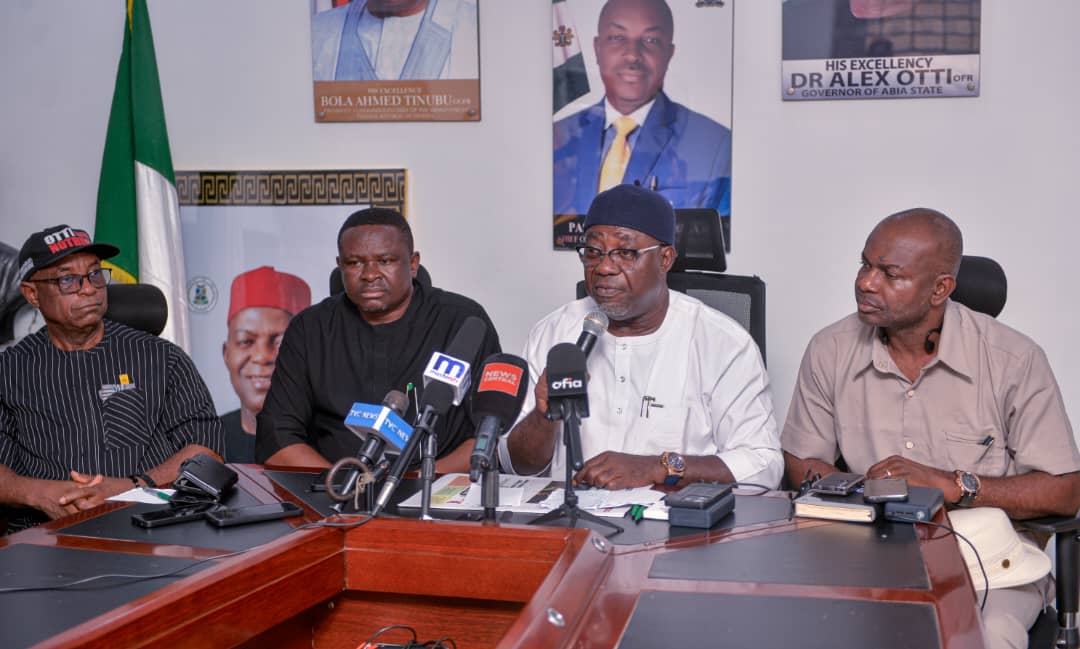
The Abia State Government has intensified its fight against malaria, announcing plans to distribute 3,030,000 insecticide-treated nets (ITNs) across the 17 Local Government Areas of the state this September, as part of a renewed strategy to reduce malaria infections and prevent malaria-related deaths.

This was announced by the Commissioner for Information ,Prince Okey Kanu during a press briefing after EXCO chaired by the Governor at the Government House, Umuahia, Abia State.
The intervention, being implemented in collaboration with the National Malaria Elimination Programme, comes against the backdrop of encouraging progress in malaria control in the state. Malaria prevalence in Abia declined from 16 per cent in 2024 to 11 per cent in 2025, below the national average of about 15.2 per cent.
The state government, however, said it would not rest on the progress recorded, setting a target of reducing malaria prevalence by another five percentage points and bringing it into single digits.
The government disclosed this as part of its latest update on developments across the state, stressing that the malaria intervention would be complemented by larval source management, identification of malaria hotspots and sustained public awareness campaigns.
It noted that the mass ITN distribution was particularly significant because Abia had not conducted a mass distribution exercise since 2010.
Residents were also urged to support the campaign by maintaining clean surroundings, eliminating stagnant water and removing potential mosquito breeding sites.

In another major healthcare intervention, the state government said its Community Supported Health Insurance Programme was gaining momentum, with the formal launch of the scheme for Abiriba Community scheduled for September 16, 2026.
Through the support of the Abiriba Improvement Union, 1,000 members of the community will be enrolled in the health insurance programme at ₦18,000 per person, representing an initial investment of ₦18 million.
The government encouraged other community development unions across the state to emulate the initiative by supporting the enrolment of their members in the health insurance programme.
It further disclosed that the recruitment portal for additional medical personnel remains open for medical consultants, medical officers and dental officers, as part of efforts to strengthen manpower in healthcare facilities across the state.
The government also reported that no cases of diseases of public health importance were recorded in the state within the period under review.
Beyond healthcare, the government announced plans to commence construction of a 200-metre road extension from Bende Road Junction by Umuwaya and the Post Office Tower, through the railway crossing to First Bank and the Akanu Ibiam Road axis.

The project follows a recently signed Memorandum of Understanding between the Abia State Government and the Nigerian Railway Corporation, with design and scoping activities already underway.
Renovation and retrofitting works have also commenced on an existing structure within the railway station to facilitate the relocation of the police post, while the abandoned road linking First Bank to Keystone, FCMB and other banks in the area will be reconstructed.
On flood control, the Emede-Ibeku Flood Control Programme has recorded substantial progress, with site clearing completed, piling about 90 per cent completed, and drainage excavation and construction approximately 80 per cent completed.
The Umuahia Capital Development Authority has also identified structurally defective buildings within Umuahia, with affected structures sealed as a precautionary measure to avert possible loss of lives.
The Abia Green Shuttle Bus Service has continued to attract strong patronage. During the free-ridership period from December 2025 to February 2026, the service conveyed 196,950 passengers.
Since the commencement of commercial operations in March, an additional 303,834 passengers used the service through August 2026, bringing total patronage since the launch of the scheme to 560,784 passengers.
The government said the figures reflected growing public confidence in the state’s transport services.
The state also highlighted its performance in the 2026 BudgIT State of States Report, covering 2017–2025.
According to the report, Abia ranked second in aggregate revenue growth, third in Internally Generated Revenue (IGR) growth, first in total expenditure growth, first in capital expenditure growth and first in personnel expenditure growth, while maintaining comparatively contained overhead expenditure.
The government said the assessment demonstrated its commitment to prudent and strategic management of public resources while expanding investments in infrastructure and human development.
It added that the assessment was consistent with the findings of the Phillips Consulting State Performance Index, which identified Abia as one of Nigeria’s fastest-improving states.
The administration said its priority remained the delivery of tangible improvements in the lives of Abia residents rather than competition with other states, adding that it would continue to implement reforms and investments across healthcare, transportation, flood control, infrastructure, education, governance and fiscal management.
-

 BURNING ISSUE2 months ago
FG, UNDP, TETFUND And Governor Otti Launch Manu-Tech UniPod, Says Innovation Will Power Abia’s Next Industrial Revolution
-
 BURNING ISSUE3 months ago
Abia Strengthens Security Architecture With Okada Restrictions, Citizen’s Engagement Centre, And Statewide Digital Connectivity Drive
-

 Education2 months ago
NSCDC, CDOWA Launch Statewide Safe School Campaign In Abia, Donate Educational And Sanitary Materials To Students
-
 NATIONAL NEWS2 months ago
NSCDC Strengthens Private Security Regulation In Abia …Moves To Enhance National Security Architecture
-

 BURNING ISSUE2 months ago
Tinubu, Obasanjo, Dame Patience Jonathan, Otti Lead National Tribute To Aguiyi-Ironsi At 60th Memorial Thanksgiving
-

 Uncategorized3 months ago
Abia Government Cracks Down on Okada Operations in Major Cities, Violators Risk Arrest and Confiscation
-
 BURNING ISSUE3 months ago
Abduction Of Two Abia School Children Heightens Security Concerns
-

 ABIA AIRPORT PROJECT3 months ago
Presidency Hails Abia’s Transformation As Renewed Hope Media Tour Showcases Impact Of Federal, State Projects